Plant Passports Explained
You may, or may not, depending on how interested you are in the minutia relating to horticulture, have wondered about your plant labels.. or lack of.. depending. Well, I’m here to explain!
A standardised plant labelling system came into force among EU member states in December 2019. This aimed to help regulate and track the movement of plant material around Europe, the idea being the introduction of new pests/plant pathogens would be at least, traceable.. if businesses actually complied to the passporting procedures.
By rights anybody who undertakes professional projects and earns money being an open garden owner, a landscaper/designer/professional gardener, including free-lance gardeners who are responsible for planting/sourcing plants, county councils/local authorities, garden centres, producers of cut flowers/food for local shops etc are meant to register as professional operators and keep records of all plants moved on or off site, specifically plant passport details, for a time period of three years.
Registering as a professional operator is different from the requirement to become an issuer of plant passports, which is for people who produce plants or work as professional forestry operators. Also, even if you’re a teeny tiny producer who sells online (like me), you need to register to issue plant passports.
If you’re someone who drives up to Dublin to buy mass produced imported plants and sell them face-to face in a dodgy market, you’re not required to register to issue plant passports as they should already come with one from the nursery that produced them. You should though, be registered as a professional operator and keep your records of plant passport details/dates etc. If you’re someone who grows a few plants and sells them at a local market face-to-face it gets a bit grey as to what you’re meant to do. Because you’re selling face-to face you shouldn’t need to issue a plant passport, but because you’re making an income producing plants, at the very least you should be registered as a professional operator, but because you’re not required to issue plant passports there’s no information to track so I guess just crack on.
Since I produce plants and sell online I had to register to issue plant passports which involves applying for a professional operators number, then sitting an online course covering the responsibilities of plant passporting aswell as learning plant pests and diseases of note in Ireland and the protocol for dealing with outbreaks. There’s a test at the end that you have to pass at a minimum score. Then you get booked for a site inspection by your local DAFM inspector (in Ireland). The inspector will check your plant welfare/hygiene, ask about your quarantine procedure and a dedicated quarantine space, check you have obvious access to a clear, visual identifier of pest/disease info sheet with the department number on display and will also check to see you are keeping a traceability system on your records. After the inspection you’ll get your cert to say you can issue plant passports. You are meant to have a yearly inspection and record check every year after that. I was advised in my last check to include evidence of regular inspection dates - not sure what regular is, so I’m guessing monthly if you’re small and/or introducing minimum outside plants and weekly if you’re a large producer introducing a lot of stock? That sounds right to me, but check what your department expects.
IF a pest or pathogen of concern is identified businesses are MEANT to call the department IMMEDIATELY and await instructions and isolate material. On discovery of an outbreak, allegedly the department will come and inspect your site and surrounding sites and follow-up your plant register to ensure they can trace where any plants may have been sent to, hence the point of keeping records. Apparently there are fines for failure to comply to the protocol but as far as I can tell, this has never happened.
I have heard so many horrific stories of the manipulation of stock recording that goes on in the huge nurseries in order to by-pass quarantine regs so they can meet the supply on lucrative orders, or when shit is spotted on a load of expensive plants on some of the giant wholesale nurseries importing stock from mainland Europe for huge landscaping projects. How else do you think Oak Processionary Moth got in.. and weirdly found itself on four Oak trees on a new housing estate in Dublin….. ?
Anyway, by-the-by. I will now translate the plant passport jargon! A plant from the EU should always come with a label that features the EU flag. and comprises A, B, C and D.
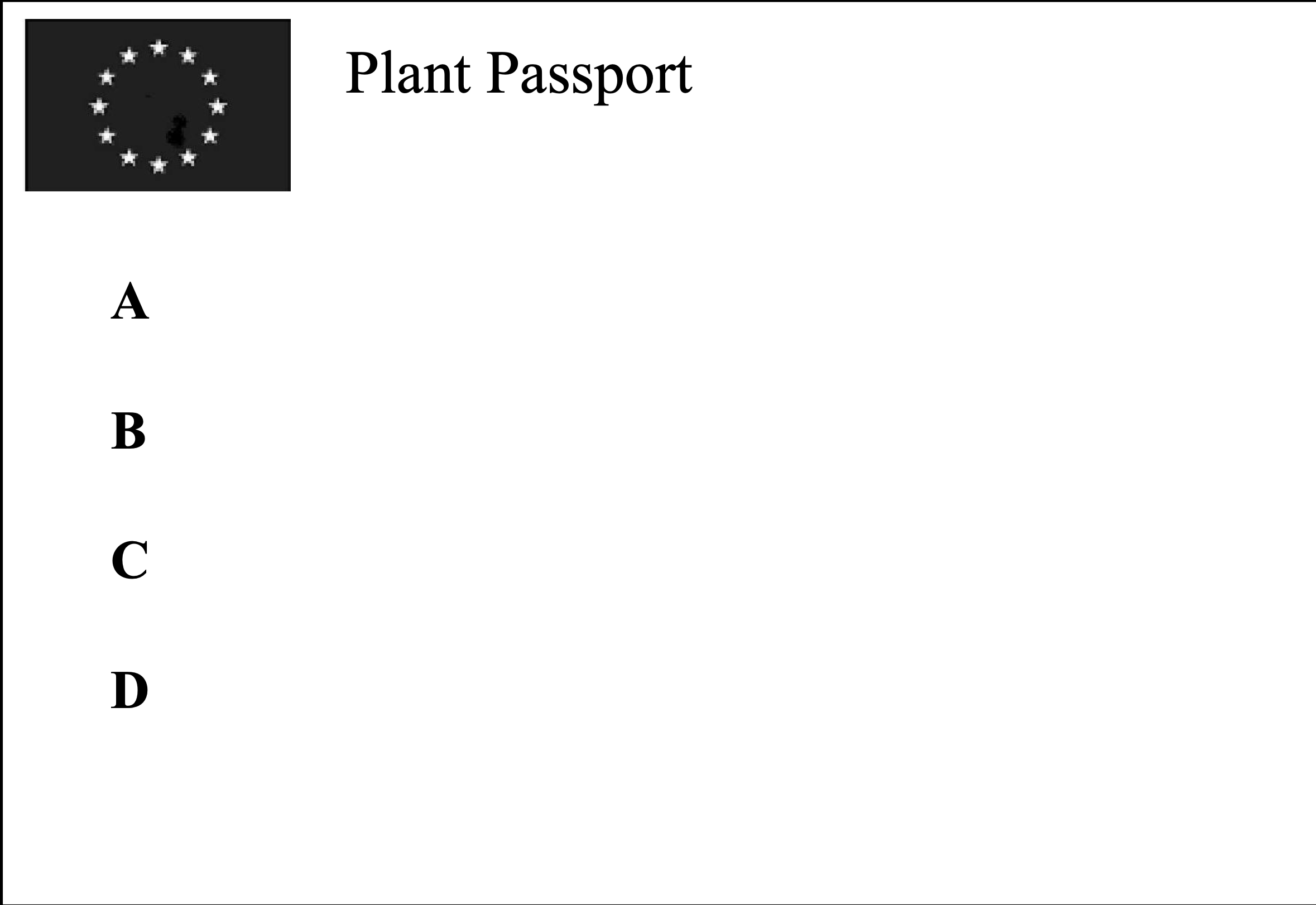
A: The genus, species and cultivar (if there is one) of the plant
B: The country of origin initials plus the plant operator’s number - in my case ; IE-010780
C: Distinct traceability code used by the nursery that must differentiate batch. I typically make a code using the first two letters of the genus & species and the year grown eg: Agin24 (Agave inaequidens 2024), but every nursery is different according to how they keep records.
D: The country of origin. Plants grown in Ireland will have initials IE - plants imported will have the initials of whatever country they’re grown in originally eg: NL for the Netherlands
There may also be other info on the label when a plant has known vulnerabilities to (being a carrier/host/food plant of) certain pests/pathogens that a country has listed as a threat, thus making that country a Protected Zone. Nurseries moving plants around need to check and see what plants each country lists as requiring protected zone notification. These plants must contain an added “PZ” - followed by the EPPO codes for its associated pests/pathogens and will be included after the “Plant Passport” title. EPPO codes are abbreviated codes of pest/pathogen names. EG; Begonia species require the extra code: PZ: BEMI.TA - indicating protected zone and the pest Bemisia tabaci (tobacco whitefly).
Eppo codes LISTED HERE IF YOU’RE INTERESTED
A plant passport is entirely separate from a phytosanitary cert. You will require a phytosanitary cert to bring a plant into or out of the UK or any other country outside of the EU. Plant passports allow easy movement of plants around EU states only.
Basically, if you want to absolutely ensure you’re not spreading (any more) shit, source your plants from Irish growers! And preferably go small.